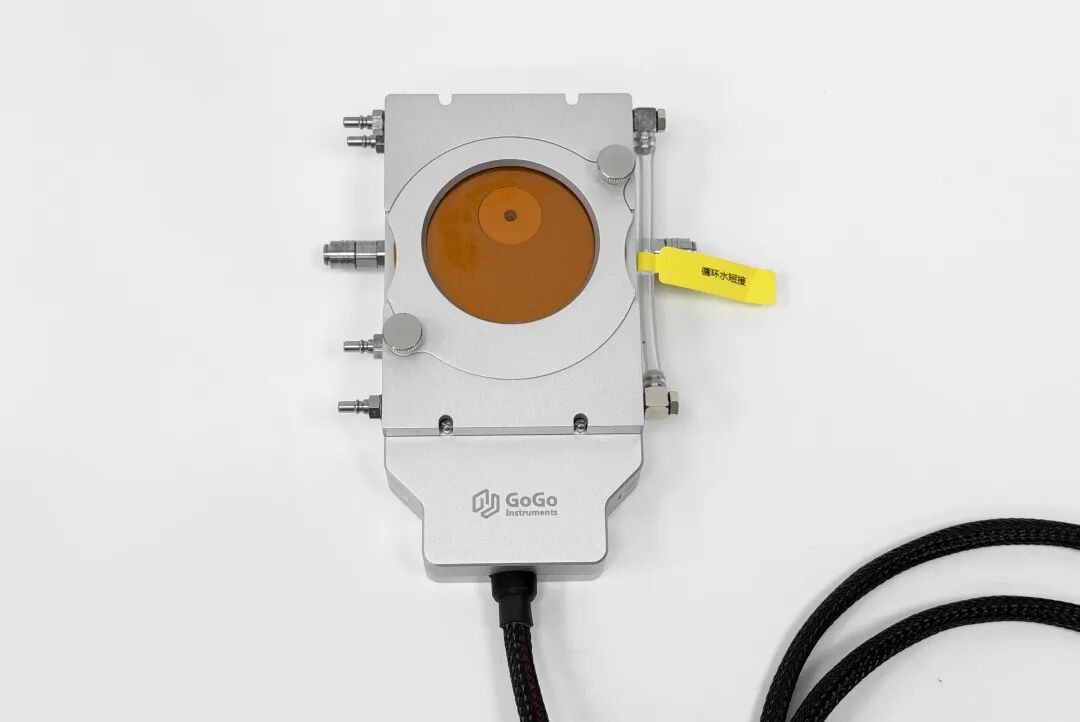
Project Delivery |Microscope Heating Stage H1500-SR Enabling In Situ SAXS/WAXS High-Temperature Experiments
Project Delivery |Microscope Heating Stage H1500-SR Enabling In Situ SAXS/WAXS High-Temperature Experiments Leave a Message We will call you back soon! Your message must be between 20-3,000 characters! Please check your
Project Delivery |Microscope Heating Stage H1500-SR Enabling In Situ SAXS/WAXS High-Temperature Experiments
Cases Project Delivery |Microscope Heating Stage H1500-SR Enabling In Situ SAXS/WAXS High-Temperature Experiments
Project Delivery |Microscope Heating Stage H1500-SR Enabling In Situ SAXS/WAXS High-Temperature Experiments
In materials science, condensed matter physics, polymer processing, and related fields, in situ characterization of nanoscale structural evolution under extreme conditions is the key to unraveling microscopic mechanisms. Small-angle X-ray scattering (SAXS) probes electron density inhomogeneities on the scale of 1–100 nm, making it a powerful tool for studying nanoparticles, pores, phase-separated structures, and more. The high brilliance of synchrotron radiation sources enables real-time tracking of millisecond-scale structural changes in materials under external fields such as high temperature and mechanical stress.
Recently, We successfully completed a major delivery – supplying the synchrotron ultra-high-temperature hot stage H1500-SR to the SAXS Station (BL16B) at the Shanghai Synchrotron Radiation Facility (SSRF). This device will be integrated with the existing Pilatus 2M (SAXS) and Pilatus 900k (WAXS) detectors at the beamline, empowering users to conduct in situ SAXS/WAXS experiments on bulk/powder materials under ultra-high-temperature conditions.
Customer Requirements: In Situ SAXS/WAXS Characterization at Ultra-High Temperatures
The BL16B SAXS beamline at SSRF is one of the first seven beamlines built at the facility. The beamline is fed by bending magnet radiation from the storage ring and is equipped with a sagittally bent water-cooled double-crystal monochromator and a bent cylindrical mirror. Currently, BL16B serves SAXS research in polymer materials, nanomaterials, mesoporous materials, colloids, liquid crystals, metallic