1500°C Four-Point Probe Stage Measures Conductive Polymer Sheet Resistivity
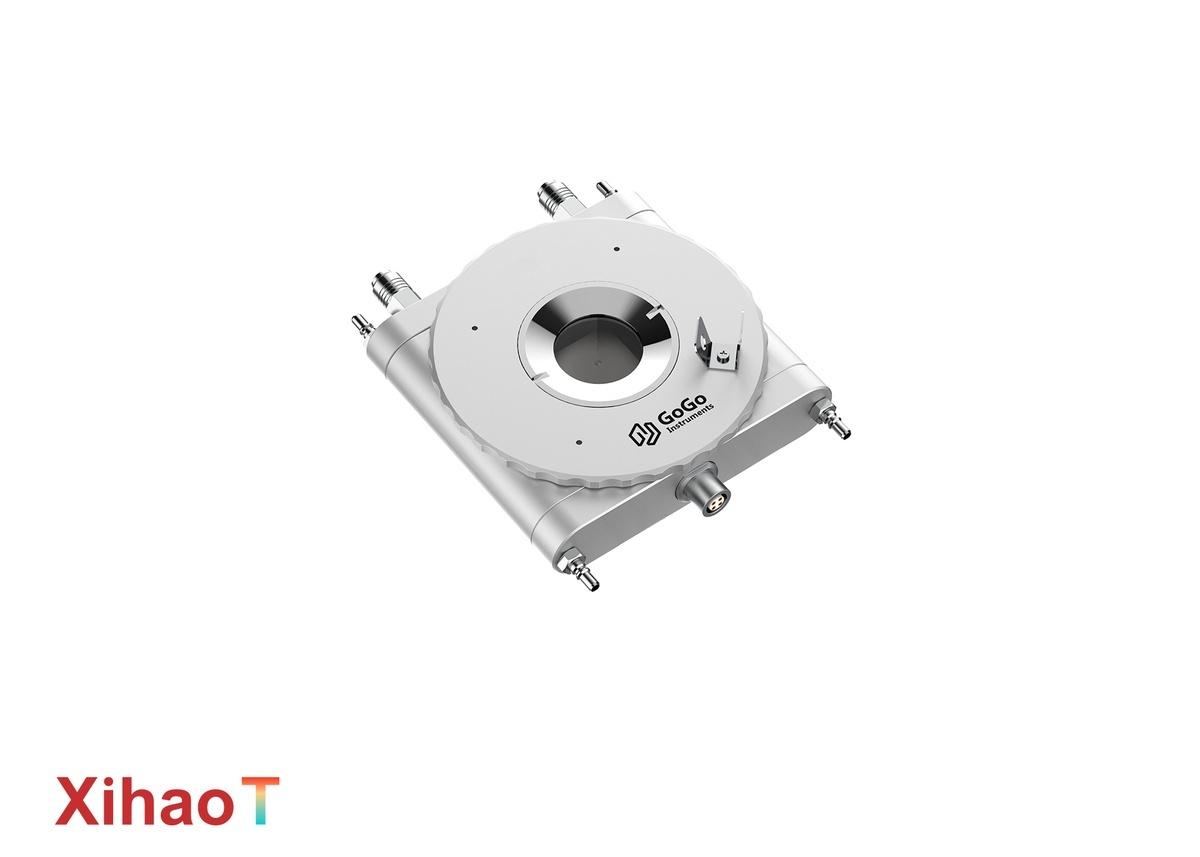
The EH1500V-R Four-Point Probe Stage is a resistance-heated, ultra-high temperature platform built for measuring the electrical resistivity of conductive polymers, conductive rubber and conductive plastics between room t
- Product Name: 1500°C Four-Point Probe Stage For Conductive Polymer Sheet Resistivity
- Application: High-temperature Electrical Resistivity Testing Of Conductive Rubber, Conductive Plastic And Conductive Polymer Films
- Model: EH1500V-R
- Temperature Range: RT~1500℃
- Temperature Stability: ±0.1℃
- Heating Rate: Max 150℃/min, Controllable Cooling Rate
技术参数
| 参数 | 规格 / 典型值 |
|---|---|
| Product Details | |
| Place of Origin | Suzhou, China |
| Brand Name | GoGo |
| Certification | ISO 9001:2015 / ISO 14001:2015 / ISO 45001:2018 |
| Model Number | EH1500V-R |
| Payment & Shipping Terms | |
| Minimum Order Quantity | 1 Set |
| Price | Negotiable |
| Packaging Details | Cardboard box + wooden case |
| Delivery Time | 30~60 work days |
| Payment Terms | T/T |
| Supply Ability | 1 set / day |
| Detail Information | |
| Product Name | 1500°C Four-Point Probe Stage For Conductive Polymer Sheet Resistivity |
| Application | High-temperature Electrical Resistivity Testing Of Conductive Rubber, Conductive Plastic And Conductive Polymer Films |
| Model | EH1500V-R |
| Temperature Range | RT~1500℃ |
| Temperature Stability | ±0.1℃ |
| Heating Rate | Max 150℃/min, Controllable Cooling Rate |
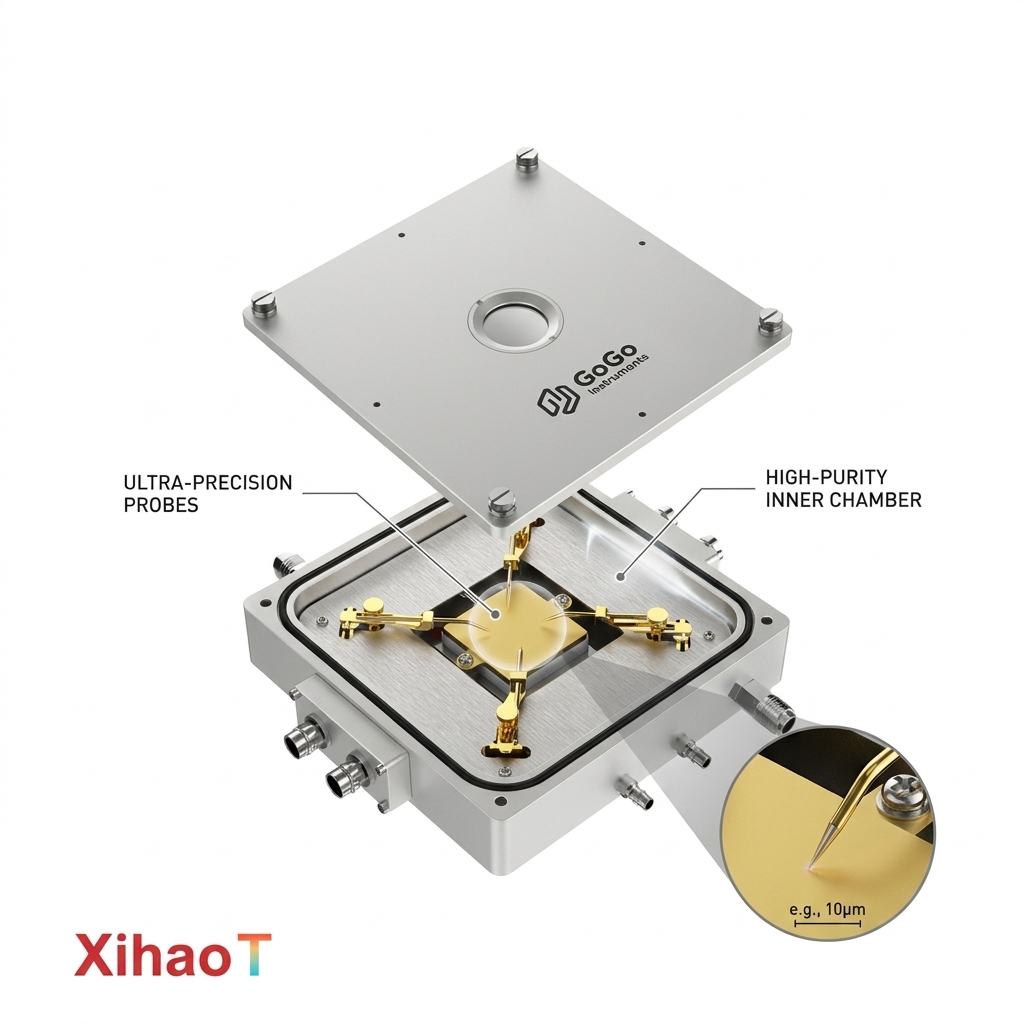
| Probe Type | 4 Pure Tungsten Probes, Four-point Probe Method |
| Sample Holder | Ceramic, φ16mm |
| Chamber Atmosphere | Atmosphere / Vacuum |
| Sample Stage Potential | Electrically Floating |
| Optical Path | Reflection, Side-incident At 30° Through φ15mm Aperture |
| Chamber Height | Without Probe 7.9mm; With Probe 0~3mm |
| Highlight | 1500°C four-point probe resistivity stage , ±0.1°C stability temperature controlled probe stage , vacuum atmosphere electrical resistivity probe stage |
The EH1500V-R Four-Point Probe Stage is a resistance-heated, ultra-high temperature platform built for measuring the electrical resistivity of conductive polymers, conductive rubber and conductive plastics between room temperature and 1500°C. Resistivity in these materials changes sharply with thermal history, filler loading and oxidation, so the probe stage holds the specimen on an inert ceramic carrier and measures it with four pure tungsten probes in a true four-point configuration. Sheet resistance and volume resistivity are therefore logged continuously while the sample is heated, soaked or cooled, without the contact and lead resistance that distorts two-wire readings.
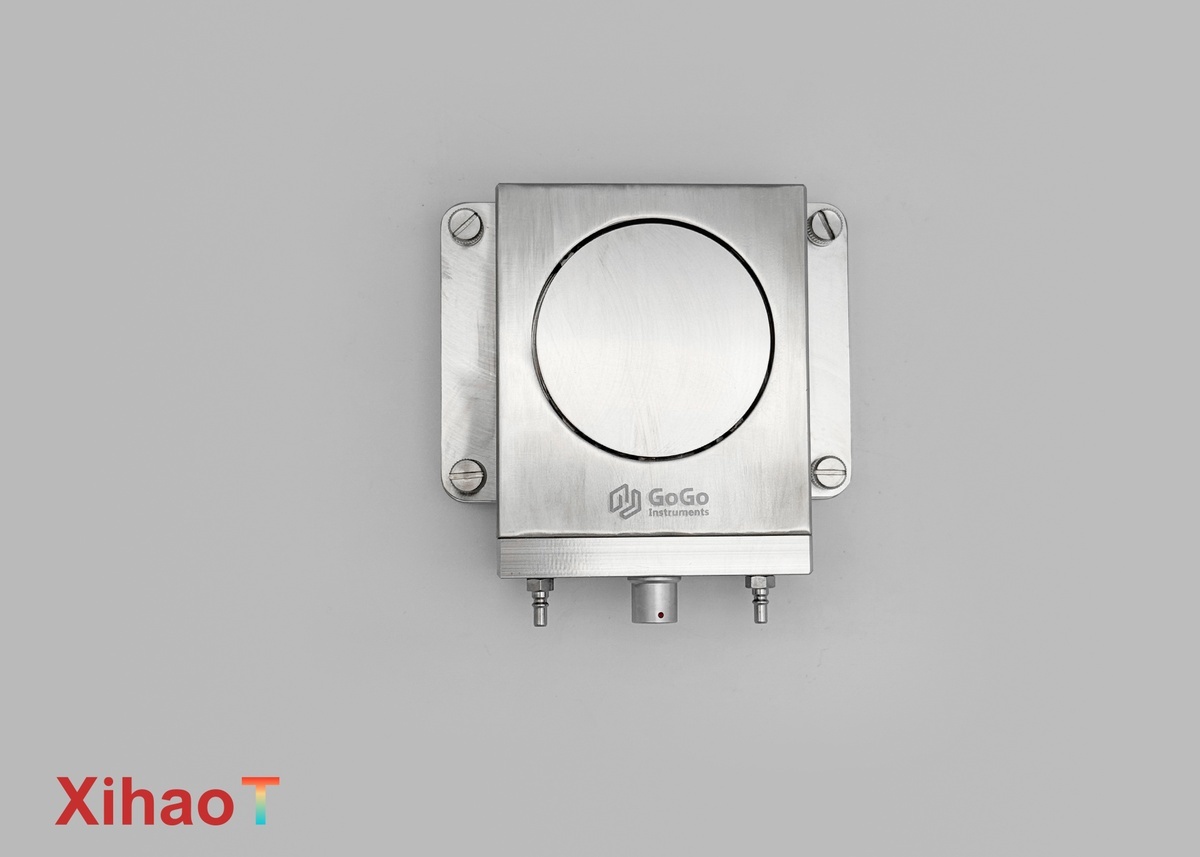
All four measurement channels terminate in BNC connectors on the chamber wall, and the sample stage is electrically floating, which removes ground-loop errors when an external source meter, electrometer or LCR meter is connected. The sealed chamber runs under vacuum or in a controlled gas atmosphere, the sample can be observed from above through a 25 mm quartz window or from below through a 10 mm port, and the whole assembly measures only 226 × 185.4 × 81 mm at 2.05 kg, so the probe stage fits on a standard optical table without a dedicated frame.
Key Features of the Four-Point Probe Stage
Four-point probe measurement: four independent pure tungsten probes separate the current-carrying and voltage-sensing circuits, so contact resistance and cable resistance are cancelled out and the resistivity values reported by the probe stage stay stable over long temperature ramps.
1500°C resistance heating: the embedded resistance heater brings the sample holder from room temperature to 1500°C, covering the melting, curing and degradation windows of most engineering polymers and conductive composites.
±0.1°C temperature stability: closed-loop control keeps the sample within ±0.1°C during soaking, which is essential when resistivity changes by several orders of magnitude across a narrow glass transition or percolation region.
Fast, controllable thermal cycles: maximum heating rate reaches 150°C/min and the cooling rate is programmable, so the probe stage reproduces production heating profiles instead of only steady-state points.
Chemically inert ceramic sample holder: the 16 mm ceramic carrier does not react with the specimen, does not leak current at elevated temperature and accepts powders, films, pellets and small moulded parts.